
CEOs
James Quincey Net Worth & Career Insights 2026

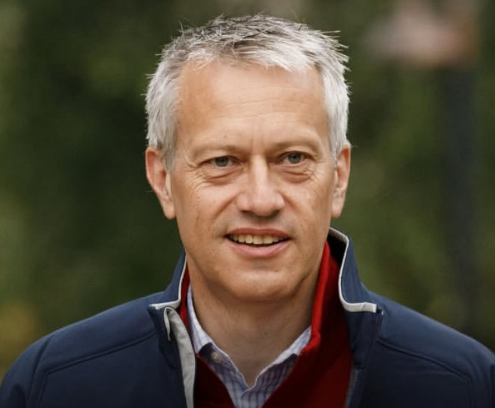
James Robert B. Quincey was born on 8 January 1965 in London, England. He spent the early years of his life in the United States, living in Hanover, New Hampshire, where his father worked as a lecturer in biochemistry at Dartmouth College. When James was five, his family returned to England and settled in Birmingham. There, he attended the independent King Edward’s School during the late 1970s and early 1980s.
After completing his secondary education, Quincey went on to study electronic engineering at the University of Liverpool. He graduated in 1986 with a Bachelor of Engineering (Honours) degree in Electronic Engineering.
| Fact | Details |
|---|---|
| Full Name | James Robert B. Quincey |
| Date of Birth | January 8, 1965 |
| Birthplace | London, England |
| Education | BEng (Hons) in Electronic Engineering, University of Liverpool |
| Early Career | Joined The Coca-Cola Company in 1996 |
| First Major Role | Director of Learning Strategy, Latin America |
| CEO Tenure | CEO of Coca-Cola from 2017 to March 2026 |
| Current Position | Executive Chairman of Coca-Cola (since March 2026) |
| Leadership Style | Focused on innovation, agility, and calculated risk-taking |
| Key Strategy | Transformed Coca-Cola into a “total beverage company” |
| Major Acquisitions | Costa Coffee, BODYARMOR, Innocent Drinks expansion |
| Global Experience | Led operations across Latin America, Mexico, and Europe |
| 2024 Total Compensation | $28,002,284 (salary, stock, bonuses, incentives) |
| Net Worth Status | Not publicly disclosed or officially verified |
| Income Sources | Executive salary, stock awards, bonuses, long-term incentives |
View this post on Instagram
A Career in Global Business Leadership
James Quincey is a veteran Coca-Cola executive with over 30 years in the business. He rose through regional management to lead the world’s largest beverage company as CEO (2017–2026), and in 2026 became Executive Chairman of Coca-Cola’s board.
During his tenure, Quincey broadened Coca-Cola’s scope from classic soft drinks into a diverse beverage portfolio across nearly every category. Under his leadership the company added dozens of high-growth brands (including water, coffee, sports drinks and dairy products) and built a more agile, consumer-focused organization.
He oversaw digital and marketing innovations and guided the global system’s strategy through rapid changes in consumer tastes and technology. Coca-Cola’s board credited Quincey with a transformative vision that expanded the company’s global footprint and brand portfolio, sharpening its competitive edge worldwide.
Early Career at The Coca-Cola Company and Rise Through Leadership Roles
Quincey joined Coca-Cola in 1996, beginning as Director of Learning Strategy for the Latin America Group. Over the next decade he took on increasingly senior roles in Latin America.
In 2003 he was appointed President of the South Latin division, where he crafted brand, pricing and distribution strategies for developing markets. Two years later, Quincey became President of Coca-Cola’s Mexico business (2005–2008).
In Mexico he grew market share for Coca-Cola’s flagship products and led portfolio expansion – notably reintroducing Coca-Cola Zero to the market – and managed the acquisition of Jugos del Valle, a major local juice brand that became one of Coke’s billion-dollar global brands.
In 2008 Quincey moved to Europe as President of Coca-Cola’s Northwest Europe & Nordics business (2008–2012). There he oversaw operations in multiple countries and guided the company through challenging economic conditions.
A key move in this role was the 2009 acquisition of Innocent Drinks, a healthy smoothie brand that Coca-Cola developed into one of its top-performing European brands. In 2013 he was named President of the Europe Group, leading Coca-Cola’s business across 38 countries.
In this role he expanded the company’s European brand portfolio and strengthened market share. He also played a leading part in forming Coca-Cola European Partners, the merger of Coca-Cola’s major European bottlers that created the world’s largest independent Coke bottler.
In August 2015 Quincey was promoted to President and Chief Operating Officer for Coca-Cola. As COO he was responsible for all of the company’s operating units globally, reporting to the CEO and board.
In that capacity he coordinated strategy across regions, streamlined the global organization and helped launch the company’s 2020 Vision growth plan. His broad international experience – spanning Latin America and Europe – positioned him as the top candidate to succeed the retiring CEO.
View this post on Instagram
As CEO of Coca-Cola (2017–2026): Strategy and Performance
Quincey became Coca-Cola’s Chief Executive Officer on 1 May 2017. From the start of his CEO tenure he set a bold strategic agenda: turn Coca-Cola into a “total beverage company” encompassing a wide range of drinks beyond carbonated soda.
He cut layers of management and signaled a cultural shift toward risk-taking and innovation – famously encouraging staff that “if we’re not making mistakes, we’re not trying hard enough.” Quincey encouraged an entrepreneurial mindset, believing the company needed to embrace experimentation in new categories.
He also initiated cost efficiencies, including approximately 1,200 cuts in corporate staff, to free up resources for marketing and new products. Simultaneously he prioritized modern digital tools and consumer data to sharpen marketing and product development.
Under Quincey’s leadership Coca-Cola pursued a diversification of its product line. The company expanded into sparkling water, tea, coffee, plant-based drinks and energy beverages, building on its core brands.
Coca-Cola acquired full ownership of BODYARMOR sports drinks (2021) and the Costa Coffee chain (2018–2019) to enter high-growth segments. It also expanded its ready-to-drink dairy and fruit beverage portfolios.
Quincey focused the company on health trends (e.g. zero-sugar and low-calorie drinks) to adapt to changing tastes. Internally he restructured regional operating units into category-driven divisions (such as Sparkling, Hydration, Coffees & Teas) so innovation and investments could be targeted by product type. Throughout his CEO tenure, Quincey emphasized reconnecting with consumers and injecting agility into Coca-Cola’s historically conservative culture.
Key Business Decisions, Innovations, and Growth Initiatives
As CEO, Quincey made several major operational decisions to support growth. He continued streamlining Coca-Cola’s concentrate business by fully disentangling the bottling system: the company completed the spin-off of most bottling operations so Coca-Cola could focus on brand marketing and concentrate manufacturing.
In the U.S. he reworked relationships with bottling partners, shifting to a profit-sharing model that enabled sales of smaller, higher-priced pack sizes. Quincey also spearheaded investment in digital marketing and e-commerce, forging partnerships with online retailers and food delivery platforms to reach new customers.
He launched innovations like expanded Coca-Cola Freestyle vending options and wider use of personalized packaging. Sustainability initiatives also accelerated; for example, Quincey’s team committed to 2030 goals of improving recycling and reducing waste in Coca-Cola’s packaging and supply chain. These decisions were all aimed at making Coca-Cola more agile and better aligned with market trends.
View this post on Instagram
Major Achievements, Financial Performance, and Company Expansion
During Quincey’s nine-year tenure as CEO, Coca-Cola’s financial performance strengthened markedly. After a period of flat volume growth, the company returned to organic revenue growth – for example, reporting 5% organic revenue growth in 2025.
Coca-Cola’s profit and cash flow both improved under his strategy. Quincey’s focus on premium and non-carbonated beverages paid off: the company added more than ten new billion-dollar brands to its portfolio (through launches and acquisitions) during this period.
Shareholders benefitted, as the stock roughly tripled in value (rising about 60%–63%) while Quincey was CEO. In 2025 alone the company reported record earnings-per-share (up 23% to $3.04) and broad-based geographic gains, reflecting gains in market share for its sparkling and still beverages.
Overall, Quincey’s leadership helped Coca-Cola extend its global footprint – growth in Latin America, Asia and Europe outpaced the industry, and Coca-Cola even gained value market share in the total non-alcoholic ready-to-drink market in recent years.
Leadership Style, Challenges, and Strategic Turning Points
Quincey is known for a pragmatic and transformational leadership style. He openly challenged Coca-Cola’s legacy of over-cautiousness – early in his CEO term he dropped corporate dress codes and retooled the company culture to reward bold ideas.
“We have to be OK making mistakes,” he told employees, emphasizing rapid innovation in smaller brands. He made clear that Coca-Cola’s success hinged on adaptability. The board lauded Quincey’s ability to navigate difficult challenges and make bold decisions.
Key turning points of his tenure included the swift response to the COVID-19 pandemic (shifting resources to off-premise sales and e-commerce), and aggressive moves into health-focused products amid rising sugar taxes.
He also invested in emerging technologies; for instance, Quincey spoke about embedding AI into marketing and operations to boost productivity. Managing headwinds – such as currency volatility, supply-chain disruptions and evolving consumer habits – Quincey maintained focus on long-term goals.
He was also keenly aware of succession planning: in interviews he quipped that building a “huge funnel” of talent and planning his own eventual replacement had been an ongoing process from his very first day as CEO.
Current Role as Executive Chairman and Ongoing Influence
Effective 31 March 2026, Quincey stepped down as CEO and became Executive Chairman of The Coca-Cola Company’s Board of Directors. In this new capacity, he presides over board governance and continues to help shape strategy while mentoring the new CEO.
Company leaders stated that Quincey would remain “very active in the business” as Executive Chairman, providing continuity and insight from his long experience. He now chairs board meetings and strategic committees, and serves as an ambassador for Coca-Cola’s vision.
Quincey remains involved in major decisions and talent development even as daily operations pass to his successor. His global perspective and institutional knowledge – honed over his three decades with Coca-Cola – ensure that he continues to influence the company’s direction and support future growth.
Quincey himself remarked on stepping into this role as a privilege after a long career, expressing confidence that his successor has the capabilities to build on the foundation he helped create.
James Quincey Net Worth
As of 2026, James Quincey’s net worth has not been publicly disclosed, and no official figure has been verified by major financial authorities. His income is derived primarily from his executive roles at The Coca-Cola Company. In his current position as Executive Chairman (following his tenure as CEO), he receives a base salary of $1.2 million and remains eligible for a target annual cash bonus equal to 200% of his base salary. He also participates in the company’s long-term incentive program, which includes stock and stock option awards.
In fiscal 2024, Coca-Cola reported his total compensation as $28,002,284, consisting of a $1,656,250 salary, $9,549,022 in stock awards, $8,588,282 in stock option awards, and $6,365,000 in cash incentives. His compensation package also includes additional benefits such as personal use of company aircraft and pension accruals. No other significant sources of income or officially documented earnings have been publicly reported.
FAQs
Q1: Who is James Quincey?
James Quincey is a British business executive and long-time leader at The Coca-Cola Company. He served as CEO from 2017 to 2026 and became Executive Chairman in 2026.
Q2: What is James Quincey’s role at Coca-Cola in 2026?
As of 2026, James Quincey serves as Executive Chairman of Coca-Cola’s Board of Directors. In this role, he focuses on governance, strategic guidance, and leadership continuity.
Q3: What is James Quincey’s educational background?
He holds a Bachelor of Engineering (Honours) in Electronic Engineering from the University of Liverpool. His academic training provided a technical foundation before entering corporate leadership.
Q4: When did James Quincey join Coca-Cola?
James Quincey joined The Coca-Cola Company in 1996. He began in a regional role and advanced through multiple international leadership positions.
Q5: What are James Quincey’s main sources of income?
His income mainly comes from executive compensation at Coca-Cola, including base salary, performance bonuses, and equity awards. Additional benefits may include long-term incentives and executive perks.
Q6: What leadership style is James Quincey known for?
He is known for promoting innovation, agility, and a willingness to take calculated risks. His approach emphasized adapting to changing consumer trends and market conditions.


Larry F. Mazza was born and raised in the Clarksburg/Bridgeport area of Harrison County in north-central West Virginia. He is one of two sons of Louie D. Mazza Sr. and Flora (Policano) Mazza. His father, Louie Sr., was a Clarksburg businessman who owned and operated a local construction company (LM Construction).
Mazza grew up in this West Virginia community and attended local schools. He graduated from Notre Dame High School in Clarksburg in 1979. He then went on to West Virginia University, where he earned a Bachelor’s degree in Business Administration.
| Facts | Details |
|---|---|
| Full Name | Larry F. Mazza |
| Net Worth | Not publicly disclosed |
| Primary Role | CEO and President, MVB Financial |
| Industry | Banking and Fintech |
| Experience | 30+ years in finance |
| Education | Business Administration, WVU |
| Certification | Certified Public Accountant (CPA) |
| Early Career | Auditor at KPMG |
| Previous Leadership | Senior roles at BB&T (Truist) |
| MVB Tenure | Joined 2005, CEO since 2009 |
| Major Achievement | Led NASDAQ listing (2017) |
| Company Growth | ~$2.8B assets, ~500 employees |
| Fintech Strategy | Founder of MVB Edge Ventures |
| Key Partnerships | Worked with NYDIG and fintech firms |
| Board Memberships | PDC Energy, BillGO, Kraken Financial |
| Entrepreneurial Venture | Co-founder of ProFootballTalk |
| Leadership Style | Focus on innovation and culture |
| 2026 Status | Active CEO and President |
Career Overview in Banking and Finance
Larry F. Mazza is an American banker with over 30 years of experience. He graduated from West Virginia University with a degree in Business Administration and became a Certified Public Accountant (CPA).
Mazza began his career at KPMG in financial-services auditing and later spent two decades at BB&T (now Truist Financial). At BB&T he rose through leadership ranks, serving as President of Empire National Bank and Regional President of One Valley Bank. In 2005 he left BB&T to join MVB Financial Corp. (then a small West Virginia bank) to lead its expansion.
Leadership Role at MVB Financial Corp. and MVB Bank
Mazza joined MVB Financial in 2005 and was named Chief Executive Officer of both MVB Financial (the bank holding company) and its subsidiary, MVB Bank, Inc., beginning in 2009. As CEO, he directs the company’s overall strategy and day-to-day operations. He also serves on MVB’s Board of Directors, guiding corporate governance and strategic planning.
In early 2022 the company separated the CEO and President roles to focus on different priorities; Mazza remained CEO responsible for operations while another executive led corporate development. In mid-2025, following the departure of the prior President, Mazza reassumed the title of President in addition to CEO. He has since overseen executive appointments (such as a new Chief Financial Officer) to strengthen MVB’s leadership team.
Key Career Achievements and Business Milestones
Under Mazza’s leadership MVB has grown dramatically. He guided the bank from a local community institution with just 35 employees to a publicly traded bank with nearly 500 team members and approximately $2.8 billion in assets.
In December 2017 Mazza led MVB Financial’s successful listing on the NASDAQ stock exchange (ticker MVBF), becoming the first West Virginia bank in nearly 20 years to trade on Nasdaq. He hailed the listing as “a major milestone” that would raise the company’s profile and reward a decade of growth.
Beyond MVB, Mazza has held prominent board roles: he served on the board of energy company PDC Energy from 2007 to 2019, including roles as Compensation and Governance Committee member. He is also involved in fintech and finance-sector boards – for example, he sits on the boards of BillGO, Inc. (a digital payments company) and Kraken Financial Services (a crypto-focused bank), and he was a founding board member of mortgage lender Intercoastal Mortgage.
In 2017 he was recognized as a NASDAQ Corporate Board Leadership Fellow for his governance expertise. In addition to banking, Mazza is an entrepreneur: he co-founded FootballTalk, LLC (owner of the ProFootballTalk.com website). He helped develop PFT’s revenue model during its NBC Sports partnership, allowing the sports news site to remain profitable while Mazza and co-founder Mike Florio maintained ownership.
Strategic Leadership Style and Business Approach
Mazza is known for an entrepreneurial, innovation-driven leadership style. He often emphasizes blending community banking values with new technology. In a press release about MVB’s tech incubator, he said, “We don’t just bank Fintech companies, we also create, develop and invest in them,” highlighting his commitment to fintech innovation.
He describes his own work approach as entrepreneurial and focuses on a strong corporate culture – once noting that MVB’s purpose and values have become its “secret sauce.” Under his guidance, MVB Bank has built an internal venture arm called MVB Edge Ventures to incubate technology businesses and fintech platforms.
For example, Mazza championed the development of the Victor and GRAND platforms to help fintech and gaming clients launch banking and payment services quickly. He also pursued advanced product offerings – notably partnering with NYDIG in 2021 to integrate Bitcoin services into MVB’s banking-as-a-service platform.
Mazza remarked that adding Bitcoin functionality “will propel [NYDIG’s] vision into reality,” illustrating his forward-leaning, client-centric approach. In summary, Mazza’s strategy balances MVB’s traditional community banking roots with an eagerness to invest in technology and culture as growth drivers.
Major Deals, Partnerships, and Financial Growth Initiatives
Mazza has overseen several transformative transactions and partnerships for MVB. In early 2020, he guided MVB Bank through an FDIC-assisted acquisition of The First State Bank (Barboursville, WV) following its failure. Under this deal, MVB assumed approximately $139.5 million in deposits and $147.2 million in assets, expanding its branch network and loan portfolio.
He then moved aggressively to expand MVB’s fintech capabilities. In April 2021, MVB acquired a majority stake in Trabian Technology, a software development firm, to strengthen its fintech platform. In June 2021, Mazza announced the launch of MVB Edge Ventures, an incubator for fintech subsidiaries.
Through Edge Ventures, MVB invested in and supported companies such as Victor Technologies, Flexia Payments (a casino card platform), and GRAND (a payments API platform). That same summer, MVB also formed a landmark partnership with bitcoin technology firm NYDIG. Mazza announced that MVB would offer white-label Bitcoin products to its fintech clients via the MVB/Victor platform.
These initiatives significantly diversified MVB’s revenue streams, as fintech-related deposits and non-interest income increased. In January 2023, Mazza pursued a merger with Integrated Financial Holdings (the parent company of West Town Bank and SBA/USDA lender Windsor Advantage) to expand national government-guaranteed lending.
The merger received shareholder approval but was later terminated in May 2023 due to changing market and regulatory conditions. Other recent initiatives include MVB’s expansion into the payments and gaming industries; for example, the 2021 Flexia acquisition enabled MVB to enhance its cashless payment solutions for casinos. These deals and partnerships under Mazza’s leadership have driven MVB’s growth well beyond its regional roots.
Challenges, Risks, and Key Decisions in His Career
Leading a small bank into the fintech era has required Mazza to navigate significant challenges. One key decision was the eventual termination of the 2023 merger with Integrated Financial Holdings. In explaining the withdrawal, Mazza cited the volatile banking environment and regulatory delays, stating that ending the merger “is the right decision at this time for the shareholders of both companies.”
He stressed that MVB’s diversified model serving fintech, gaming, and government lending clients helps it remain resilient despite market shifts. Managing rapid growth has also posed risks: as MVB expanded its fintech and gaming client base, maintaining rigorous compliance and risk controls became increasingly critical.
For example, the FDIC acquisition of First State Bank required MVB to integrate troubled assets while safeguarding its capital. At times, MVB has also faced governance scrutiny, including a board member’s departure over performance concerns, but Mazza has publicly reaffirmed his team’s focus on profitability and shareholder value.
Overall, Mazza’s tenure has involved balancing innovation with caution: pursuing new ventures such as fintech platforms and digital assets while ensuring the bank’s capital strength and credit quality remain sound. He has consistently emphasized steady dividends and strong balance sheet metrics as priorities, reflecting a cautious approach in a rapidly evolving industry.
Current Role, Business Activities, and Industry Influence
As of 2026, Larry Mazza continues to serve as CEO of MVB Financial Corp., and since mid-2025, he has also held the role of President. The company is listed on Nasdaq under the ticker MVBF. In these roles, he remains responsible for MVB’s daily operations, strategic direction, and overall growth.
Recent board-level developments under his leadership include the appointment of Michael Sumbs as CFO, effective July 2025, and Jonathan Logan as Chief Accounting Officer. In late 2025, Mazza announced a second $10 million stock repurchase program, citing MVB’s “robust capital position” and expressing confidence in long-term shareholder value.
Under his leadership, MVB Bank has strengthened its industry presence and received recognition. For example, the bank became a member of the American Fintech Council in February 2025, highlighting its role at the intersection of banking and fintech. Mazza’s influence extends beyond MVB, as he continues to serve on the West Virginia Board of Banking and Financial Institutions, as well as on fintech and related boards, positioning him as a prominent voice in banking innovation.
Within the company, he advocates a forward-looking model that integrates embedded finance, digital payments, and gaming services, while maintaining core banking principles. Industry observers note that under Mazza’s guidance, MVB has emerged as a case study in successfully blending community banking with modern fintech solutions.
Larry F. Mazza Net Worth
As of 2026, Larry F. Mazza’s net worth has not been publicly disclosed, and no figure has been officially verified by major financial authorities. His income comes from his compensation as CEO and President of MVB Financial Corp (for example, his total compensation was $1,468,144 in 2022, comprising base salary, bonus, and equity awards), as well as related stock-based remuneration.
He also earns income from corporate directorships, serving on the board of PDC Energy and as a director of the fintech company BillGO, and from entrepreneurial ventures, notably his co-ownership of the sports media company Football Talk, LLC (ProFootballTalk). Specific earnings from board fees or the media venture have not been publicly disclosed.
FAQs
1. Who is Larry F. Mazza?
Larry F. Mazza is an American banking executive and the CEO and President of MVB Financial Corp. He has over 30 years of experience in banking and financial services.
2. What are Larry F. Mazza’s key achievements?
He led MVB Financial’s NASDAQ listing in 2017 and expanded the bank into fintech and digital services. Under his leadership, the company grew significantly in assets and workforce.
3. What is Larry F. Mazza’s role at MVB Financial?
He serves as CEO and President of MVB Financial Corp. In this role, he oversees strategy, operations, and long-term growth initiatives.
4. What is Larry F. Mazza’s educational background?
He earned a Bachelor’s degree in Business Administration from West Virginia University. He is also a Certified Public Accountant (CPA).
5. What companies has Larry F. Mazza worked for?
He began his career at KPMG and later held leadership roles at BB&T (now Truist Financial). He joined MVB Financial in 2005.
-

 Entrepreneur6 months ago
Carl Hartley Net Worth & Career Inside the Supercar Empire
-

 Influencers6 months ago
Shammi Net Worth: What Powers His Brand in 2026
-

 Entrepreneur6 months ago
Tom Hartley Jnr and the Business Behind the Name
-

 Businessman6 months ago
Robin Stanton-Gleaves: Career, Club, and Companies
-

 Twitch Streamers4 months ago
Emiru Net Worth 2026: How She Earns as a Creator
-

 Singers5 months ago
Mary Hopkin’s Career, Earnings, and Net Worth 2026
-

 Entrepreneur6 months ago
Who is Vinh Giang and what is his estimated net worth?
-

 Rappers4 months ago
Clavish Net Worth 2026 Earnings, Music, and Success