Astronauts
How much was Neil Armstrong worth at the time of his death?

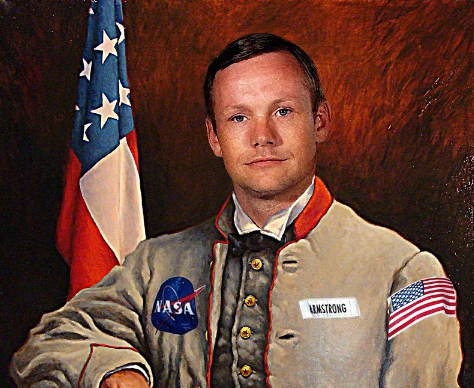
Neil Alden Armstrong was born on 5 August 1930 on his grandparents’ farm near Wapakoneta, Ohio. He was the eldest of three children of Stephen and Viola Armstrong; his father served as Ohio’s state auditor. Armstrong spent his childhood in various small Ohio towns as his father’s job with the state led the family to move frequently. By 1944 the family had returned to Wapakoneta, where Neil’s later childhood and schooling took place.
From a very young age, Armstrong showed an interest in aviation. At age two his father took him to the National Air Races in Cleveland, and by age six he had taken his first airplane ride in a Ford Tri-Motor aeroplane. These early experiences with flight sparked a lifelong fascination with flying. As a youth he built model aeroplanes and joined the Boy Scouts; he remained active in Scouting and earned the rank of Eagle Scout. He began formal flight training in his mid-teens – taking flying lessons at 15 – and earned his private pilot’s licence on his 16th birthday.
Armstrong was an excellent student. He graduated from Blume High School in Wapakoneta in 1947, having skipped a grade and thus finishing high school at age 17. Immediately after high school he received a Naval Aviation College scholarship and enrolled at Purdue University (West Lafayette, Indiana) to study aeronautical engineering. His college studies were briefly interrupted when the Navy called him to active duty, but he returned to Purdue after this service and completed his bachelor’s degree in 1955.
Neil Armstrong – Key Facts
| Fact Category | Details |
|---|---|
| Full Name | Neil Alden Armstrong |
| Date of Birth | August 5, 1930 |
| Place of Birth | Near Wapakoneta, Ohio, USA |
| Nationality | American |
| Profession | Astronaut, Aeronautical Engineer, Test Pilot |
| Famous For | First human to walk on the Moon (Apollo 11, 1969) |
| First Space Mission | Gemini 8 (1966) – First successful spacecraft docking |
| Apollo 11 Role | Mission Commander and Lunar Module pilot |
| Historic Achievement | First person to step onto the Moon on July 20, 1969 |
| Education | BSc in Aeronautical Engineering, Purdue University |
| Military Service | U.S. Navy pilot; flew 78 missions in the Korean War |
| NASA Selection | Selected as astronaut in 1962 (Next Nine group) |
| Post-NASA Career | Aerospace professor and corporate board member |
| Major Honors | Presidential Medal of Freedom, Congressional Space Medal of Honor |
| Neil Armstrong Net Worth | Not publicly disclosed; income came from NASA salary, university teaching, and corporate board roles |
Neil Armstrong Career
Neil Armstrong (1930–2012) was an American astronaut and aeronautical engineer renowned for commanding Apollo 11, the 1969 mission that first landed humans on the Moon. He served in the U.S. Navy during the Korean War and later joined NASA as a research pilot before being selected as an astronaut in 1962. He flew on two crewed space missions and achieved history-making milestones in spacecraft rendezvous and lunar exploration. After retiring from NASA he taught aerospace engineering at university and held leadership roles in aerospace companies, continuing to influence aviation and space programs.
Early Career as a Naval Aviator and Test Pilot
Armstrong began his career as a U.S. Navy pilot, flying 78 combat missions (earning two Air Medals) in F9F Panther jets during the Korean War. In 1955 he joined the National Advisory Committee for Aeronautics (NACA, later NASA) and became a research pilot at the Flight Research Center in Edwards, California. There he flew a wide range of high-performance aircraft, including the North American X-15 rocket plane.
Between 1960 and 1962 Armstrong completed seven X-15 flights, reaching altitudes above 200,000 feet and speeds near Mach 6. He also piloted experimental jets (F-100, F-104, F-105, etc.) and early lifting-body and parawing vehicles, logging over 2,450 flight hours.
This testing work involved developing new control sensors and flight systems, and it established his reputation as a skilled pilot-engineer in high-speed aeronautics.
Selection into NASA and Astronaut Training
After his years at the Flight Research Center, Armstrong was chosen in 1962 as one of NASA’s second group of astronauts (the “Next Nine”). He underwent intensive astronaut training at the Manned Spacecraft Center, learning spacecraft systems, flight operations, and survival skills. Upon completion of training he was assigned as command pilot for the forthcoming Gemini 8 mission. His technical background and piloting experience made him well suited for the demands of spacecraft rendezvous and lunar flight preparation.
Gemini 8 Mission and First Spaceflight Experience
Armstrong’s first spaceflight was as command pilot of Gemini 8 in March 1966, alongside pilot David Scott. On the first day of the mission they achieved the first docking of two spacecraft in Earth orbit, linking their Gemini capsule with the Agena target vehicle. Minutes after docking a thruster on the Agena spacecraft stuck on, causing the docked pair to roll violently.
Armstrong undocked the Gemini and took manual control, safely damping the tumble and stabilizing the vehicle. With the spacecraft’s systems compromised, NASA aborted the mission and he performed an emergency reentry to Earth after about 10 hours. Despite this early termination, the flight demonstrated crucial rendezvous techniques and showed Armstrong’s calm decision-making under pressure.
Apollo 11 Mission and the First Moon Landing
In July 1969, Armstrong served as commander of Apollo 11, NASA’s historic lunar landing mission. He piloted the Lunar Module Eagle during descent to the Moon’s Sea of Tranquility on July 20, becoming the first person to step onto another world.
As Armstrong put his left foot onto the lunar surface at 10:56 p.m. EDT, he famously said, “That’s one small step for [a] man, one giant leap for mankind.” Over the 2½-hour moonwalk he and Lunar Module Pilot Buzz Aldrin collected rock samples and set up scientific experiments on the lunar surface. The crew then returned safely to Earth on July 24, completing the mission that fulfilled President Kennedy’s goal of a crewed lunar landing and secured Armstrong’s place in spaceflight history.
Major Achievements, Honors, and Career Milestones
- Presidential Medal of Freedom (1969) – As one of the Apollo 11 astronauts, Armstrong received the nation’s highest civilian honor (with distinction) from President Nixon for his role in the Moon landing.
- Robert J. Collier Trophy (1969) and Robert H. Goddard Memorial Trophy (1970) – Honors awarded for outstanding achievements in aeronautics and astronautics, recognizing the Apollo 11 accomplishments.
- Congressional Space Medal of Honor (1978) – Armstrong was among the first recipients of this award (presented by President Carter) for “exceptionally meritorious efforts” in advancing the space program.
- Professional Fellowships – He was a Fellow of the Society of Experimental Test Pilots and the Royal Aeronautical Society, and an Honorary Fellow of the American Institute of Aeronautics and Astronautics (AIAA) and the International Astronautical Federation, reflecting his respected technical status.
- Other Honors – Armstrong received dozens of decorations from multiple countries acknowledging his contributions to space exploration. In 2014 NASA’s Dryden Flight Research Center was officially renamed the Neil A. Armstrong Flight Research Center in his honor.
Technical Skills, Engineering Expertise, and Contributions to Space Exploration
Armstrong’s career blended piloting skill with deep engineering knowledge. At the Flight Research Center he worked closely on aircraft development: for example, he piloted the first X-15 test equipped with a new airflow-direction sensor and also tested an adaptive flight-control system designed for that rocket plane.
He collaborated with engineers to evaluate vehicle performance and improve design, contributing practical insights to the development of high-speed aircraft. Later, as NASA’s deputy associate administrator for aeronautics, he oversaw broad research efforts and helped transfer innovations like digital fly-by-wire control systems into the aviation industry.
Early in his career he even advised the USAF-NASA Dyna-Soar spaceplane project, analyzing abort and landing procedures. In each role, Armstrong applied his aeronautical engineering expertise to advance spacecraft and aircraft technology.
Post-NASA Career and Academic Contributions
After Apollo 11 Armstrong did not fly in space again, instead taking on NASA management responsibilities. He became NASA’s deputy associate administrator for aeronautics (1969–1971), coordinating the agency’s aviation research and technology programs. In 1971 he resigned from NASA to accept a faculty position at the University of Cincinnati’s College of Engineering.
As a professor of aerospace engineering (1971–1979) he designed and taught courses on flight mechanics and aircraft design, and supervised graduate research in propulsion and space systems. Armstrong later reflected on his time in academia, noting, “I really enjoyed teaching. I love to teach. I love the kids,” expressing a genuine dedication to education.
In parallel with his academic work, Armstrong maintained an active presence in the aerospace industry. He served on or chaired several technology firms: for example, he was chairman of Computing Technologies for Aviation (CTA, 1982–1992) and of EDO Corporation (from 2000), and he sat on the board of Eaton Corporation for many years.
He also contributed to national space policy: he was a member of the 1985–86 National Commission on Space and served as vice-chairman of the presidential commission investigating the 1986 Space Shuttle Challenger disaster. In the early 1990s Armstrong hosted a PBS documentary series on aviation (“First Flights”), sharing his aeronautical insights with a broader audience.
Neil Armstrong’s Career Legacy in Space History
Armstrong’s career achievements remain central to the story of space exploration. In 2014 the NASA flight research center at Edwards was renamed the Neil A. Armstrong Flight Research Center, ensuring that his name lives on in the field of aerospace research.
His first steps on the Moon stand as one of humanity’s most iconic moments and continue to inspire new missions – NASA’s Artemis program, for instance, explicitly builds on the Apollo legacy he helped create.
Colleagues and historians note his methodical engineering approach and emphasis on teamwork, qualities that set a professional standard for astronauts.More than half a century after Apollo 11, Armstrong is remembered as a pioneering pilot-engineer whose “one small step” symbolized a giant leap in human achievement.
What was Neil Armstrong’s net worth when he died?


-

 Entrepreneur7 months ago
Carl Hartley Net Worth & Career Inside the Supercar Empire
-

 Influencers7 months ago
Shammi Net Worth: What Powers His Brand in 2026
-

 Entrepreneur7 months ago
Tom Hartley Jnr and the Business Behind the Name
-

 Businessman6 months ago
Robin Stanton-Gleaves: Career, Club, and Companies
-

 Twitch Streamers5 months ago
Emiru Net Worth 2026: How She Earns as a Creator
-

 Singers6 months ago
Mary Hopkin’s Career, Earnings, and Net Worth 2026
-

 Journalist6 months ago
Piers Morgan Net Worth 2026: Media Career and Income
-

 Entrepreneur7 months ago
Who is Vinh Giang and what is his estimated net worth?