
Athletes
Pat Cash Biography, Achievements, and Net Worth 2026


Patrick Hart “Pat” Cash was born on 27 May 1965 in Melbourne, Victoria. He was born at Box Hill Hospital in Melbourne and grew up in a large family home in the city. His father, Patrick Cussen “Pat” Cash Sr., had been a star Australian rules footballer who played for the Hawthorn Football Club in the 1950s; he later became a lawyer.
Cash’s mother, Dorothy, was an American and a strong family figure. Pat Cash was the eldest of three children born to this couple, and he also had three older half-siblings from his mother’s first marriage. He was raised in the Roman Catholic faith, and spent his early years in suburban Melbourne.
Cash’s schooling took place at Catholic institutions in Melbourne. He first attended Our Lady of Good Counsel Primary School in Deepdene. (He later recalled running away on the first day at this school before settling in.)
At age 11 he moved on to Marcellin College, a Catholic boys’ secondary school in Melbourne. After his parents changed residence, he continued his education at Whitefriars College in Melbourne. From an early age he was notably athletic.
At Whitefriars he became captain of the football team and was one of the school’s top sprinters. He played many sports at school – including cricket, athletics, hockey and Australian-rules football – often excelling in competitions for his age. Sport was an early influence in Cash’s life both at home and at school. His father taught him to kick a football as a young child, and both parents played tennis for recreation.
Around age nine Cash began taking tennis lessons – his parents encouraged him into the sport. Even while at school he continued training and competing in junior tennis events. By his mid-teens he was recognised as one of Australia’s leading junior players, eventually earning a sports scholarship to the Australian Institute of Sport.
| Fact | Details |
|---|---|
| Full Name | Patrick Hart “Pat” Cash |
| Date of Birth | 27 May 1965 |
| Birthplace | Melbourne, Victoria, Australia |
| Nationality | Australian |
| Profession | Former professional tennis player, coach, and commentator |
| Career-High Ranking | World No. 4 in May 1988 |
| Grand Slam Title | Won the Wimbledon men’s singles title in 1987 |
| Playing Style | Aggressive serve-and-volley player known for strong net play |
| Signature Look | Famous for his black-and-white checkered headband |
| Total Career Titles | Won 18 professional titles across singles and doubles |
| Davis Cup Success | Helped Australia win the Davis Cup in 1983 and 1986 |
| Grand Slam Finals | Reached five Grand Slam finals, including two Australian Open finals |
| Major Injury | Suffered a ruptured Achilles tendon in 1989, which affected his career |
| Post-Retirement Work | Worked in coaching, television commentary, and tennis development |
| Pat Cash Net Worth | Not publicly disclosed; income has come from coaching, media work, and tennis-related ventures |
View this post on Instagram
Pat Cash Career
Pat Cash (born 27 May 1965) is a former Australian tennis player whose professional career peaked in the late 1980s. A hard-working serve-and-volleyer, Cash was known for his fast volleys and trademark black-and-white checkered headband.
He reached a career-high ATP singles ranking of world No. 4 in May 1988. His greatest achievement was winning the 1987 Wimbledon men’s singles championship, the only Grand Slam singles title of his career, where he defeated world No. 1 Ivan Lendl in the final.
Cash reached five Grand Slam finals in total (including two Australian Open finals) and won 18 top-level tour titles in singles and doubles combined. He also played a key role on Australia’s Davis Cup teams, helping secure titles in 1983 and 1986. Cash’s combination of aggressive net play and competitive spirit made him a prominent figure in men’s tennis during that era.
Breakthrough and Rise in Professional Tennis
Cash turned professional late in 1982 and won his first ATP Tour singles title that year at a tournament in Melbourne. He quickly emerged as one of Australia’s leading players.
In 1983 he became the youngest player ever to compete in a Davis Cup final for Australia; in that final he won the decisive singles rubber against Sweden’s Joakim Nyström, clinching the Cup for Australia. That victory at age 18 marked the first major success of his career.
In 1984 Cash broke into the world top 10 for the first time and reached the semifinals at two Grand Slam events (Wimbledon and the US Open). He also began to be recognized for his athletic serve-and-volley game, well-suited to grass and fast courts, and for his championship-style intensity on court.
By the mid-1980s Cash had established himself as a regular on the professional tour, winning additional titles (such as Brisbane in 1983) and solidifying his reputation as a fierce competitor.
View this post on Instagram
1987 Wimbledon Victory and Career Peak
The highlight of Cash’s career came in 1987, a year in which he made two Grand Slam finals. He first reached the final of the Australian Open (then played on grass), where he lost a close five-set match to Stefan Edberg.
Two months later he triumphed at Wimbledon. After defeating top players including Mats Wilander and Jimmy Connors in earlier rounds, Cash faced World No. 1 Ivan Lendl in the Wimbledon final.
He won in straight sets (7-6, 6-2, 7-5) to claim the championship. In celebration he famously climbed into the stands to hug his family and coach, an act that started a tradition later adopted by many other champions.
The 1987 Wimbledon victory was Cash’s first and only major singles title. That summer propelled him to his highest career ranking (No. 4 in 1988) and cemented his status as a Grand Slam champion.
Playing Style: Serve-and-Volley and On-Court Strengths
Pat Cash was renowned for an aggressive serve-and-volley style that dominated from the baseline into the net. He possessed a powerful, penetrating serve and excellent reflexes and touch on volleys, allowing him to close out points quickly at the net.
Cash was highly mobile and played with intensity, often covering the court tirelessly to chase down shots. His game was particularly effective on fast grass and indoor courts, where he frequently dictated play by coming forward.
On-court he projected confidence and flair, symbolized by his signature black-and-white checkered headband (and at times a cross earring) which became a part of his trademark look. Opponents recognized Cash as a “hard-fighting serve-and-volleyer” whose best strengths were net play and attacking returns.
View this post on Instagram
Major Career Achievements, Titles, and Records
Over his career Cash won a total of 18 professional titles (singles and doubles combined). In singles he claimed six ATP Tour titles, including his first in Melbourne (1982) and his final singles title in Hong Kong (1990).
He reached the singles final of the Australian Open twice (1987, 1988) and captured the Wimbledon singles title in 1987. In doubles he also was highly accomplished: he reached the Wimbledon doubles final in 1984 and 1985 (as runner-up) and won 11 doubles titles on the tour.
His career-high rankings reflect this success: he achieved world No. 4 in singles (1988) and world No. 6 in doubles (1988). Cash was honored by his home country for his contributions; he was inducted into the Sport Australia Hall of Fame in 2005.
Throughout his career and afterwards, he was often cited as an exemplar of classic Australian tennis, blending grit with attacking style.
Davis Cup Success and International Career Highlights
Cash was a key player for Australia in Davis Cup competition. In the 1983 final (against Sweden) the then-18-year-old Cash won the decisive singles rubber over Joakim Nyström to clinch the Cup for Australia.
Again in 1986, in a rematch of the 1983 final, Cash played a starring role. He overcame a two-set deficit to defeat Sweden’s Mikael Pernfors in the crucial deciding match, giving Australia a 3-2 victory in the final.
In that 1986 final he actually won all three of his matches (including a singles win over Stefan Edberg and a doubles win partnering John Fitzgerald), demonstrating his versatility under pressure. These two triumphs (1983 and 1986) made Cash a two-time Davis Cup champion.
He also reached a third Davis Cup final in 1990, when Australia finished runner-up to the USA. In addition to Davis Cup, Cash represented Australia in other team events of the era (for example, he was a runner-up at the Hopman Cup in 1989).
While none of Cash’s career records has stood as an all-time world record, his youth record in 1983 (youngest to win a Davis Cup final singles rubber at the time) and his role in Australia’s winning teams are notable highlights of his international career.
Career Challenges, Injuries, and Comebacks
Cash’s career was hampered by injuries, especially in the years following his Wimbledon victory. In April 1989 he suffered a ruptured Achilles tendon during the Japan Open, an injury that sidelined him for most of a year.
He struggled to regain his top form after that; recurrent injuries to his Achilles tendons, knees, and back limited his playthrough the early 1990s. He won his last top-level singles title at the Hong Kong Open in 1990, but was never again ranked inside the world top 10.
Cash continued to compete on the tour into the mid-1990s, but with diminishing success. He officially retired from full-time singles competition in 1997, although he remained active in doubles (winning a final doubles title in 1996) before winding down his tour career.
Throughout these challenges he occasionally attempted comebacks; for example, he played on ATP Challenger and exhibition circuits in the late 1990s, and later competed on various senior and champions tours. However, he did not achieve a permanent return to his mid-1980s peak level.
View this post on Instagram
Post-Playing Career: Coaching, Commentary, and Influence
After retiring as a player, Pat Cash built a prominent career as a coach and tennis commentator. He worked with several high-profile players on the professional tour. Notably, he served as a part-time coach for players such as Greg Rusedski and Mark Philippoussis, helping refine their net play and aggressive style.
In 2017 Cash also joined the coaching team of American player CoCo Vandeweghe during the grass-court season, guiding her game with a focus on serve-and-volley tactics. In parallel with coaching, Cash became a familiar voice and face in tennis broadcasting.
He has worked as a television commentator for major networks: he hosted CNN’s tennis series Open Court and has been a longtime co-commentator for BBC television’s tennis coverage, especially at Wimbledon. In these roles he provided expert analysis and insight, drawing on his experience as a Grand Slam champion.
Cash has also been involved in tennis education and promotion: he founded the Pat Cash Tennis Academy, which offers coaching clinics internationally, and he developed a series of instructional tennis tips videos. His contributions to the sport were recognized in 2005 when he was inducted into the Sport Australia Hall of Fame, underscoring his enduring impact on Australian tennis.
View this post on Instagram
Current Work, Coaching, Media Appearances, and Tennis Involvement
In recent years Cash has remained active in tennis as a coach, commentator, and mentor. He has made periodic returns to coaching on the professional circuit; for example, in early 2026 he worked as a part-time coach to Australian ATP player Li Tu at the Launceston International tournament in Tasmania.
Cash also continues to appear regularly in the media. He contributes commentary and analysis to coverage of major events (such as Wimbledon, where he is known as a BBC pundit) and speaks out on Australian tennis development.
Domestically, he has been a voice on Australian radio and TV tennis programs, discussing current players and policies. Meanwhile, Cash’s tennis academies and camps are ongoing, offering camps and clinics for players of all levels.
He also participates occasionally in senior and exhibition tournaments (for instance, he won the 45+ Wimbledon doubles title multiple times in 2010s). Through all these activities (2021-2026), Cash has maintained a high profile in tennis. Even decades after his playing peak, he remains influential as a coach and commentator, bridging his on-court legacy with ongoing contributions to the sport.
Pat Cash Net Worth


Michael Carrick’s net worth is private and has not been publicly verified. His income primarily comes from his football career. He is the head coach of Manchester United, earning a salary from the club (the exact terms are undisclosed), and he previously earned from his playing contracts in the English Premier League. He has no known major endorsement deals or media contracts, and any additional income from such sources is not publicly disclosed.
Tottenham to Manchester United Transfer (2006) – £14m Fee
Manchester United signed Carrick from Tottenham Hotspur in July 2006 as their first acquisition of the summer. The two clubs announced a deal “worth up to €27 million” (approximately £18 million). The base transfer fee was widely reported to be around £14 million, with add-ons potentially increasing the total package.
View this post on Instagram
Also Read: Mark Noble Net Worth
West Ham to Tottenham Transfer (2004) – £3.5m Fee
In August 2004, Carrick moved from West Ham United to Tottenham Hotspur for a reported fee of around £3.5 million. Contemporary reports at the time noted that Spurs paid approximately £3.5m to secure the then 23-year-old midfielder.
Manchester United Midfield Mainstay (2006–2018)
After joining Manchester United in 2006, Carrick established himself as a regular deep-lying midfielder under Sir Alex Ferguson. He made his Old Trafford debut at the age of 25 and went on to make more than 300 league appearances across 12 seasons at the club.
During this period, Carrick won five Premier League titles (2007, 2008, 2009, 2011, and 2013) and was part of the squad that won the UEFA Champions League in 2008. He also lifted the FA Cup in 2016, two League Cups, the UEFA Europa League in 2017, as well as multiple FA Community Shields and the FIFA Club World Cup.
In 2017, following Wayne Rooney’s departure, Carrick was appointed club captain for the 2017–18 season. He retired in mid-2018, having made more than 700 senior club appearances across his career.
Return to Manchester United as Head Coach (2026–Present)
In January 2026, Carrick returned to Manchester United as interim head coach following the departure of Rúben Amorim. He oversaw wins against Manchester City and Arsenal and guided the team to a third-place finish in the 2025–26 Premier League, securing Champions League qualification.
Following this, he was appointed permanent head coach of Manchester United in May 2026 on a contract running until 2028. Upon his appointment, he said that leading United “fills me with immense pride” and pledged that the club and its supporters deserved to “be challenging for the biggest honours again.”
Also Read: Korey Smith Net Worth
FAQs
How did the Michael Carrick Foundation start?
Michael Carrick launched the foundation in 2017, funding it with the proceeds from his Manchester United testimonial match. The charity supports sports, educational, and community programs for disadvantaged youth across Greater Manchester and Tyne and Wear.
What was Michael Carrick’s highest salary as a player?
Carrick earned an estimated peak annual base salary of $5.45 million during his final years at Manchester United, from 2016 to 2018.
Did Michael Carrick play for the England national team?
Yes, he earned 34 senior caps for England between 2001 and 2015, representing the country at both the 2006 and 2010 FIFA World Cups.
What coaching roles did Michael Carrick hold before becoming a head coach?
After retiring as a player in 2018, Carrick spent over three years as an assistant manager at Manchester United, working under José Mourinho and Ole Gunnar Solskjær.
Where did Michael Carrick begin his football career?
He began his youth career at Wallsend Boys Club in North East England before joining West Ham United’s academy, where he won the FA Youth Cup in 1999.
Did Michael Carrick ever play in the lower football leagues?
Yes, he had short loan spells away from West Ham United, playing for Swindon Town in 1999 and Birmingham City in 2000.
Also Read: James Maddison Net Worth
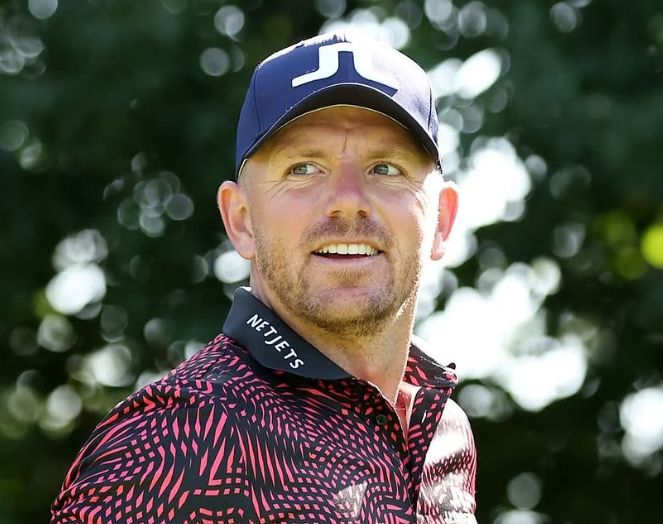
Matt Wallace’s net worth remains private as of 2026, with no figure officially verified by major financial authorities. His income comes from professional golf tournament prize money, including more than €10.6 million earned on the DP World Tour, along with sponsorship and endorsement contracts. In January 2026, he became a Penfold Golf brand ambassador, while also maintaining endorsement deals with Titleist, J.Lindeberg, NetJets, Omega, FootJoy and Nutrition X. Specific earnings from these sources have not been publicly disclosed.
Dual Tour Membership: PGA and DP World Prize Earnings
Matt Wallace holds dual membership on the PGA Tour and the DP World Tour. He joined the PGA Tour in 2020 and has competed on both circuits since. His DP World Tour profile lists 5 career victories and €10,613,865 in prize money. On the PGA Tour, Wallace ranks 282nd on the all-time money list, with $9,720,981 earned through mid-2026. In early 2026, his on-course earnings total $1,192,366, placing him 80th on the current money list.
View this post on Instagram
Also Read: Paul Lawrie Net Worth
Career PGA Tour Victories and Prize Money Earnings
Wallace has one PGA Tour victory: the 2023 Corales Puntacana Championship in the Dominican Republic. The event had a $3.8 million total purse, with Wallace earning a $684,000 winner’s share. The win came in his 80th start, gave him his first PGA Tour title, and helped secure his Tour card. It also remains his largest single-event PGA payday to date.
Before that victory, his biggest PGA Tour payday was $575,000 for tying 3rd at the 2019 PGA Championship. In 2023, Wallace’s season earnings approached $1.44 million, helped by his Corales Puntacana Championship win.
Career DP World Tour Victories and Prize Earnings
Wallace has also built a strong record on the DP World Tour, formerly the European Tour. He owns 5 DP World Tour titles. Three came in 2018: the Hero Indian Open, the BMW International Open, and Made in Denmark. His other two DP World Tour victories are the 2017 Open de Portugal, a dual-ranked event, and the 2024 Omega European Masters.
Those victories came with sizable prize payouts. His 2018 BMW International Open win earned €333,330, while his playoff victory at the 2018 Made in Denmark paid €250,000. Most recently, Wallace won the 2024 Omega European Masters, which had a €3.25 million purse and paid €496,979.28 to the champion.
Golf Apparel Endorsements and Nutrition Sponsorships
Wallace’s on-course apparel is provided by J.Lindeberg, a Swedish golf clothing brand. J.Lindeberg extended Wallace’s multi-year deal through the 2023 season. Wallace has publicly praised the brand’s “smart but technical” designs, which he prefers to wear in competition. Beyond apparel, Wallace also has lifestyle partnerships. He holds an endorsement deal with Nutrition X, a sports nutrition brand, giving him a sponsor in the dietary and supplement category.
Major Championship Finishes and Prize Money Earnings
Wallace’s best major championship result is a tie for third place at the 2019 PGA Championship. He earned $575,000 for that T3 finish at the 2019 PGA Championship, the U.S. PGA Championship, in a tournament with roughly an $11 million purse. He has had limited success in other majors, but the 2019 PGA remains his best finish and largest major-related payout.
View this post on Instagram
Alps Tour Domination Leads to Challenge Tour Promotion
Englishman Matt Wallace turned professional in 2012 and first emerged on Europe’s developmental tours. He dominated the 2016 Alps Tour, winning six tournaments, including an unprecedented run of five consecutive victories. Those results earned him the Alps Tour Order of Merit title and full playing rights on the 2017 Challenge Tour.
International Team Competitions: Hero Cup and Team Cup
Wallace’s tour form earned him selections in high-profile team competitions. He was chosen for the Great Britain & Ireland side in the inaugural Hero Cup against Continental Europe in January 2023, and again for the renamed Team Cup in January 2025. Both Abu Dhabi-based events are Ryder Cup-style match-play contests designed to showcase Europe’s emerging talent. Wallace scored points for the GB&I teams on both occasions, playing alongside other leading professionals.
FAQs
When was Matt Wallace born?
Matt Wallace was born on 12 April 1990 in Hillingdon, England.
Which college did Matt Wallace attend?
Matt Wallace attended Jacksonville State University before turning professional.
What country does Matt Wallace represent in professional golf?
Matt Wallace represents England in professional golf.
How tall is Matt Wallace?
Matt Wallace is listed as 6 feet 1 inch tall.
Is Matt Wallace still active as a professional golfer?
Yes. Matt Wallace remains active on the PGA Tour and DP World Tour.
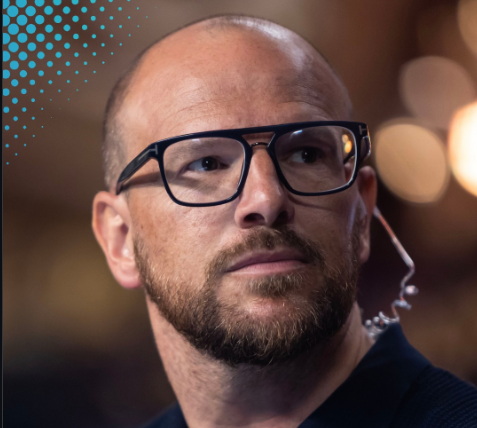
Mark Webster’s net worth remains private in 2026, with no officially verified public figure. His income includes competitive darts prize winnings, with official records showing £894,214 in career prize money, along with media work as an analyst and commentator on Sky Sports Darts and ITV broadcasts. Figures for his broadcasting fees and sponsorship income have not been publicly revealed.
WDF Europe Cup victory and open titles (2006–2007)
In 2006, Webster won the WDF Europe Cup singles title at age 23. That same year, he added several national Open championships, including the Northern Ireland Open and the Welsh Masters. He continued that run in 2007 by winning the WDF World Cup singles crown and several other ranking events, including the Welsh Open, Welsh Classic and Canadian Open. His 2006–07 results took him to the top of the BDO Order of Merit, and he finished 2007 as the number-one ranked player in the BDO.
Players Championship Finals runner-up (2011)
Webster’s 2011 season included another deep run at the PDC World Championship. He reached the semi-finals after defeating fifteen-time champion Phil Taylor on his way to the last four. Later that year, he reached the final of the Players Championship Finals, his first major PDC final, and finished as runner-up to Kevin Painter. The season gave him a second consecutive World Championship semi-final and a place in a major PDC final.
View this post on Instagram
Also Read: Keith Deller Net Worth
Reported tournament prize earnings from professional darts (~£894k)
Mark Webster competed on the British Darts Organisation circuit from 2005 to 2009 and on the PDC tour from 2009 to 2019. Darts statistics sources put his total tournament prize earnings at roughly £894,214.
BDO World Championship 2008: £85,000 winner’s prize
Webster’s career highlight came at the 2008 BDO World Darts Championship. He defeated Simon Whitlock in the final, won the title, and received the champion’s cheque of £85,000.
PDC World Championship semi-finals (2010 & 2011) prize money
Webster earned prize money from his PDC World Championship semi-final runs. In 2010, a losing semi-finalist was guaranteed £40,000, while the winner of the third-place match received £60,000 in total. Webster’s £60,000 combined his £40,000 semi-final payout with the £20,000 playoff prize. By 2011, the prize structure had changed, with each semi-finalist earning £50,000.
Signature Winmau darts sponsorship and products
Winmau, a major darts equipment manufacturer, has sponsored Webster and promoted a Mark Webster signature darts line in its catalogue. On its official site, Winmau says Webster “has now made the decision to play on the PDC circuit” and describes the range as “Mark’s very own range of darts…replicas of the exact darts he uses.”
Tournament promotion business (Mark Webster Darts Promotions Ltd)
Webster founded a promotions company in 2009. UK Companies House records show that Mark Webster Darts Promotions Ltd (company no. 06837124) was incorporated on 4 March 2009. The company’s filings list its status as in liquidation, meaning it is no longer active.
Also Read: Josh Rock Net Worth
View this post on Instagram
2010 PDC World Cup runner-up: £20,000 team prize
In late 2010, Webster partnered with Barrie Bates to represent Wales at the inaugural PDC World Cup of Darts. The team reached the final but lost to the Netherlands. As runners-up, they shared a £20,000 prize fund, in line with the tournament’s published payouts.
World Cup of Darts final appearances (2010, 2017)
Webster also had success in PDC team events. At the inaugural PDC World Cup of Darts in 2010, he teamed up with Barrie Bates to represent Wales. The pair reached the final and finished runners-up to the Dutch team. In that final, Webster won both of Wales’ singles matches, but the deciding doubles leg went to the Netherlands.
Seven years later, Webster returned to the World Cup final with Gerwyn Price. At the 2017 World Cup of Darts, the Welsh team again reached the championship match and finished second behind the Netherlands. His two final appearances, in 2010 and 2017, remain the highlights of his World Cup doubles career.
Broadcasting career with Sky Sports and ITV
After concluding his full-time playing career in 2020, Webster moved into broadcasting. He became a darts analyst and commentator, most notably for Sky Sports’ darts coverage. He regularly provides expert analysis on Sky Sports during major PDC tournaments, including the Premier League.
Alongside his work with Sky, Webster has also joined ITV’s darts broadcast team as a pundit and commentator on events not covered by Sky. Today, Mark Webster is widely recognised as a leading television figure in the world of darts.
FAQs
What was Mark Webster’s job before full-time darts?
Mark Webster was a fully qualified registered plumber before becoming a full-time professional darts player.
When did Mark Webster become a full-time darts professional?
Mark Webster became a full-time professional after moving to the PDC in 2009. His PDC career continued through the 2019 season.
What nicknames is Mark Webster known by in darts?
Mark Webster is known by the nicknames “Webby” and “The Spider.”
Was Mark Webster a left-handed darts player?
Yes, Mark Webster played darts left-handed. His player profile also lists his hometown as Denbigh and his nickname as “Webby.”
Did Mark Webster play in the Premier League Darts?
Yes, Mark Webster played in Premier League Darts in 2011. He finished eighth that year.
Did Mark Webster win a PDC ranking title?
Yes, Mark Webster won one PDC Players Championship title. It sits alongside his televised runs and BDO world title.
-
 Entrepreneur8 months ago
Carl Hartley Net Worth & Career Inside the Supercar Empire
-
 Influencers7 months ago
Shammi Net Worth: What Powers His Brand in 2026
-
 Entrepreneur8 months ago
Tom Hartley Jnr and the Business Behind the Name
-

 Businessman7 months ago
Robin Stanton-Gleaves: Career, Club, and Companies
-

 Twitch Streamers5 months ago
Emiru Net Worth 2026: How She Earns as a Creator
-

 Journalist7 months ago
Piers Morgan Net Worth 2026: Media Career and Income
-

 Singers7 months ago
Mary Hopkin’s Career, Earnings, and Net Worth 2026
-

 Entrepreneur8 months ago
Who is Vinh Giang and what is his estimated net worth?